How to Save Money on Your UK Energy Bill Before Winter
October 09, 2026 - Money Tips

October 09, 2026 - Money Tips

October 03, 2026 - Money Tips

September 29, 2026 - Money Tips
Energy bills have a habit of climbing just as the weather turns. By the time you feel the first cold snap, many of the easiest savings have already slipped through your fingers. The good news is that autumn is the perfect moment to act. You can cut usage, fix small draughts, switch tariffs, claim support and build habits that keep more heat in your home and more money in your bank account. This guide walks through practical steps, from no-cost behaviour changes to bigger investments, with UK-specific examples.
Before you turn anything down or buy any gadget, understand what you are actually paying for. Your energy bill is usually made up of two main parts: the unit rate you pay for each kilowatt hour (kWh) of gas or electricity, and the standing charge, which is a fixed daily amount. Reducing your usage cuts the unit-rate part of your bill, but it will not remove the standing charge. That is why comparing tariffs matters as much as turning down the thermostat.
Two households can use exactly the same amount of energy and still pay different amounts because their unit rates, standing charges or payment methods differ. A low unit rate can look attractive until you notice a high daily standing charge. For a low-usage household, a slightly higher unit rate with a lower standing charge may work out cheaper. For a high-usage household, the opposite can be true. Check the annual estimate, not just the monthly direct debit.
If your fixed deal has ended, you are likely on a standard variable tariff. These are governed by the Ofgem price cap, but the cap does not cap your total bill. It limits the unit rate and standing charge a supplier can charge on a default tariff. Your actual bill still depends on how much energy you use. Fixed deals may offer certainty, while variable tariffs may fall if wholesale prices drop. Look at exit fees, contract length and the projected annual cost before switching.
Estimated bills can hide expensive habits or errors. If you do not have a smart meter, take a reading at least once a month and submit it to your supplier. If you do have a smart meter, use the in-home display or supplier app to see what you are using in real time. A useful exercise is to check your meter before and after a normal evening. You may be surprised by how much a tumble dryer, electric heater or old fridge-freezer contributes.
Not every saving requires spending money. These changes cost nothing and can be started today.
Heat escapes through gaps long before it escapes through walls. Draught-proofing is often the cheapest and most satisfying DIY energy saving. Start with the biggest, most obvious gaps and work through the house methodically.
Keep ventilation in mind. Modern homes need some airflow to prevent damp and condensation. Do not block air bricks, trickle vents or extractor fans. If you have a gas boiler, open fire or wood burner, you must maintain safe ventilation.
Loft insulation, cavity wall insulation and solid wall insulation can make a big difference, but they cost more upfront. Check whether you qualify for government or supplier-funded schemes, such as the Energy Company Obligation (ECO4) or the Great British Insulation Scheme. Your local council may also run its own grant or loan scheme. If you rent privately, ask your landlord about insulation and heating efficiency, as they may have legal obligations.
The cheapest unit of energy is the one you never use.
Your heating system may be capable of more control than you are using. Take time to learn how your programmer, thermostat and radiator valves work together.
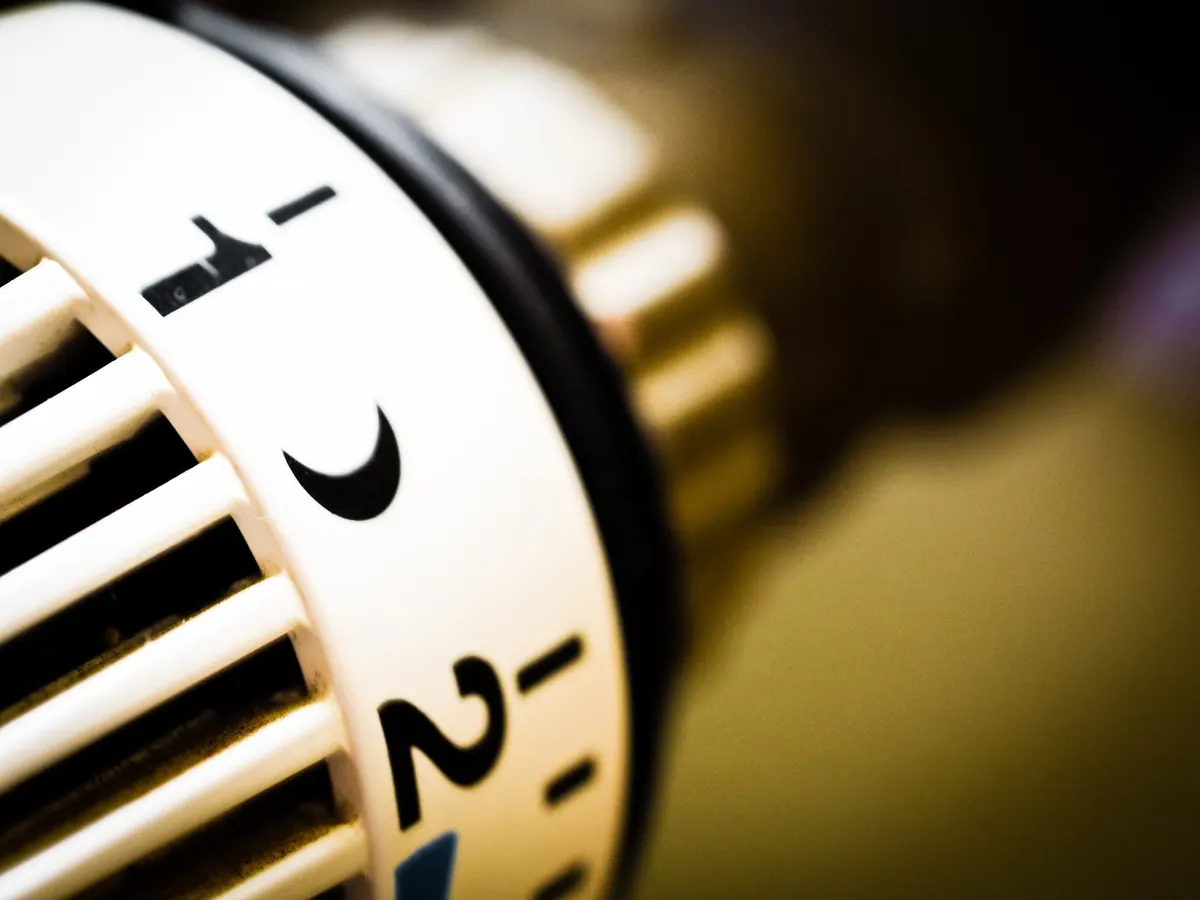
Thermostatic radiator valves (TRVs) let you set different temperatures in different rooms. Turn them down in bedrooms, hallways and spare rooms, and keep them higher in living rooms and bathrooms. Avoid turning every radiator off, because the boiler still needs somewhere to send heat.
A simple programmer can save more than an expensive smart thermostat if you use it properly. Smart thermostats can learn your routine, detect open windows and let you control heating from your phone, but they are not essential. If you already have one, check that the schedule matches your actual week. Many people heat empty homes for hours without realising.
An annual boiler service keeps your system safe and efficient. Ask the engineer to check the pressure, clean the condensate trap and confirm the controls are working. If you have a condensing boiler, lowering the flow temperature to around 55°C to 60°C can improve efficiency, but only if your home still heats comfortably. Adjust gradually and check radiators on cold days.
If you have a hot water cylinder, insulate it with a jacket and set the cylinder thermostat to around 60°C to prevent harmful bacteria. Insulate exposed hot water pipes too. If you have a combi boiler, you may be able to lower the hot water temperature slightly, but do not go so low that you need to run the tap for longer.
Your tariff and payment method can change your bill as much as your habits. Review them before winter, not after the first expensive quarter.
Fixed tariffs give you certainty for a set period. Variable tariffs can rise or fall with the price cap. Neither is automatically better. If you value budgeting, a fixed deal may be worth it. If you can tolerate uncertainty, a variable tariff may be cheaper when wholesale prices fall. Always read the exit fees and contract end date.
Economy 7, Economy 10, EV tariffs and smart time-of-use tariffs offer cheaper electricity at certain times. They can be excellent if you can shift usage to off-peak hours, such as charging an electric car or running appliances overnight. They can be expensive if most of your usage happens at peak times. You usually need a smart meter to access the best versions.
Check your direct debit amount against your actual usage. If it is too high, you are giving your supplier an interest-free loan. If it is too low, you may build debt. Prepayment meters can be more expensive, but suppliers must offer ways to switch to a credit meter in many circumstances. If you spot a billing error, complain to your supplier first and then consider the Energy Ombudsman if it is not resolved.
Sometimes the easiest way to save is to go through your home room by room and look for obvious waste.
Energy debt can spiral quickly, so ask for help early. You do not have to wait until you miss a payment.
If you rent, remember that your landlord may be responsible for some heating and insulation issues. Report problems in writing and keep a copy.
Winter energy bills rarely fall on their own. They respond to preparation. Start with the free changes, then move to cheap draught-proofing and controls, and finally consider insulation, tariffs and grants. You do not need to do everything at once. Pick three actions this week, check your bill next month and build from there. A warmer home and a lower bill are both possible, but the best time to start is before the cold arrives.
Photo: TBIT / Pixabay

A practical festive checklist for planning gifts, food and travel so your Christmas spending stays inside a budget...
A plain-English walk through the UK payslip: gross pay, tax codes, National Insurance, pension contributions and...
October 09, 2026 - Money Tips
October 03, 2026 - Money Tips
Copyright © 2026 Mint Log. All Right Reserved.